Good practice last year isn’t good enough anymore.
Even cyber-insurance providers are getting more selective before accepting cover, or worse, before paying claims.
With the number of claims skyrocketing insurers are increasingly asking, “What did you do to protect yourself from the obvious and known risk from cyberhackers?”
The levels of protection you put in place 1 or 2 years ago probably aren’t adequate for the threats today. They are evolving so rapidly.

So what can you do?
Hackers aren’t waiting for you to make a decision to put protections in place.
They are spending every waking moment trying to find new ways of stealing your data. They have set themselves up as businesses to do evil. They hire the best and brightest talent, and have the latest tech – simply because it’s worth it. Its organised crime and these guys are the mafia of the modern age.
We see continuous hacks on most of our clients. These are attempts to penetrate their firewalls, or guess their passwords on Office 365. We see fake webpages through phishing attempts, and we see techniques to harvest password reset questions by asking for favourite teachers, or first cars, or favourite band on platforms like FaceBook.
That’s why your cyber-insurance and business continuity insurance providers will be starting to ask more demanding questions when you renew your cover. They are well aware of the risk and they want to know that you have taken all reasonable steps.
You need to be able to reassure them that you have:
- deep endpoint protection
- a penetration and vulnerability assessment
- data governance that is fit for purpose
- awareness programmes for all users and verification
- dark web monitoring
- multi-factor authentication and complex passwords
and so much more – the very items we have included in our KARE for Security services.
The question for you, and your insurer, is what level of protection is appropriate for your organisation so your insurer will cover you if you need to claim? That is why we have two levels of cyber-protection, and, because this isn’t static, it is why we keep investing and researching additional tools to help defend you from harm.
The Hackers are turning up their attacks on you – are you turning up your defences to match?
One quote we saw recently that rang true was:
“A cybercriminal only has to be lucky once, while a defender has to be lucky every minute of every day.”

What’s your next step? We’ve created a simple 9-point checklist to help you navigate the cyber-risk landscape and find the right solution for you.

Webinar Replay: Decoding SMB1001. Understanding Your Cybersecurity Maturity
Cybersecurity certification doesn't have to be complex or overwhelming. Understanding SMB1001: What is SMB1001 and why it was created specifically for organisations like yours The five certification levels (Bronze to Diamond) and what each means for your organisation...

Empowering Craigs Investment Partners with Microsoft 365 Copilot
Accelerating AI Adoption Across a Nationwide Network When Craigs Investment Partners embarked on their AI journey, they weren’t simply looking for a training provider. They were looking for a partner who understood the pace, precision, and care required in a highly...

5 Ways AI Can Transform Your Annual Budget Planning Process
How New Zealand businesses are using AI to build smarter, faster budgets in 2026 March marks budget season for most New Zealand businesses. Finance managers face the familiar challenge: predicting next year's needs with this year's information while wrestling with...

Beyond Endpoint Protection – What is ITDR?
Your Microsoft 365 environment is where your business happens. It's also where attackers want to be. Most New Zealand businesses have invested in endpoint protection such as antivirus, EDR, or even MDR, but are they leaving a critical attack surface completely...

The Rise of The Machines
What OpenClaw and Moltbook Mean for Your Business If you've been following tech news lately, you've probably encountered OpenClaw. It's a viral AI agent that's sparking both excitement and anxiety across the business world. Originally called Clawdbot, then briefly...

AI Slop: The Rise, the Risk, and How to Stay Ahead
The Quiet Emergence of AI Slop As generative AI becomes part of everyday business workflows, a new challenge has begun to surface: AI slop. This refers to the growing volume of AI‑generated content that looks polished but adds little true value. It is the email that...
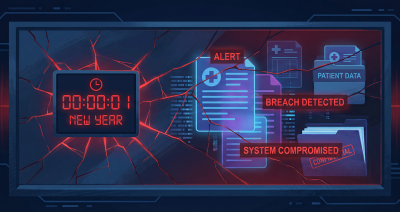
Manage My Health Data Breach – What We’ve Heard
What New Zealand Businesses Need to Learn from 126,000 Compromised Patient Records New Zealand's largest patient information portal confirmed a major cyber security breach on New Year's Eve, with up to 126,000 users potentially affected. The Manage My Health incident...

AI’s December Acceleration
6 Developments That Changed the Game (While You Were Planning for Christmas) December 2025 wasn't just about end-of-year planning. While New Zealand businesses were wrapping up 2025, AI platforms shipped features that fundamentally change how work gets done in...

Five Business IT Trends New Zealand Companies Should Watch in 2026
As we move into 2026, New Zealand businesses face a technology landscape where digital transformation is no longer optional.For NZ business managers preparing budgets and strategic plans for the year ahead, understanding the key IT trends will be critical to...

URGENT ADVISORY: We’re seeing a significant increase in authentication attacks this Christmas
Significant Hacking Trend Over this 2025/26 Christmas and New Year period, our Kinetics KARE security monitoring has detected a significant increase in sophisticated authentication attacks targeting New Zealand businesses. KARE Foundation clients are protected and...