
Good practice last year isn’t good enough anymore.
Even cyber-insurance providers are getting more selective before accepting cover, or worse, before paying claims.
With the number of claims skyrocketing insurers are increasingly asking, “What did you do to protect yourself from the obvious and known risk from cyberhackers?”
The levels of protection you put in place 1 or 2 years ago probably aren’t adequate for the threats today. They are evolving so rapidly.

So what can you do?
Hackers aren’t waiting for you to make a decision to put protections in place.
They are spending every waking moment trying to find new ways of stealing your data. They have set themselves up as businesses to do evil. They hire the best and brightest talent, and have the latest tech – simply because it’s worth it. Its organised crime and these guys are the mafia of the modern age.
We see continuous hacks on most of our clients. These are attempts to penetrate their firewalls, or guess their passwords on Office 365. We see fake webpages through phishing attempts, and we see techniques to harvest password reset questions by asking for favourite teachers, or first cars, or favourite band on platforms like FaceBook.
That’s why your cyber-insurance and business continuity insurance providers will be starting to ask more demanding questions when you renew your cover. They are well aware of the risk and they want to know that you have taken all reasonable steps.
You need to be able to reassure them that you have:
- deep endpoint protection
- a penetration and vulnerability assessment
- data governance that is fit for purpose
- awareness programmes for all users and verification
- dark web monitoring
- multi-factor authentication and complex passwords
and so much more – the very items we have included in our KARE for Security services.
The question for you, and your insurer, is what level of protection is appropriate for your organisation so your insurer will cover you if you need to claim? That is why we have two levels of cyber-protection, and, because this isn’t static, it is why we keep investing and researching additional tools to help defend you from harm.
The Hackers are turning up their attacks on you – are you turning up your defences to match?
One quote we saw recently that rang true was:
“A cybercriminal only has to be lucky once, while a defender has to be lucky every minute of every day.”

What’s your next step? We’ve created a simple 9-point checklist to help you navigate the cyber-risk landscape and find the right solution for you.

Webinar Replay: What Recent Cyber-Breaches Teach Us About Protecting Your Business
Every cyber-breach tells a story, and the best way to protect your business is learning from others' experiences before they become your own. This isn't about fear—it's about learning. We'll translate real-world breach experiences into practical insights you can apply...
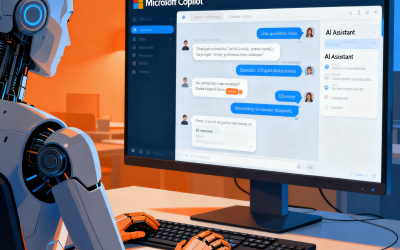
Microsoft Copilot in 2026: Why So Many Businesses Are Taking a Second Look
Think Copilot Was a Let‑Down? It’s Quietly Got Much Better in 2026 If you tried Microsoft Copilot early on and walked away a little underwhelmed, you’re not alone. We heard it a lot last year: “It’s interesting, but it’s not quite there yet.” The thing is that Copilot...

Your (Home/Small Business) Router Could Be Working for Criminals Right Now
Right now, somewhere in the world, a home or office router is quietly routing cybercriminal traffic, and its owner is completely unaware. That's the reality revealed by the discovery of KadNap, a sophisticated malware campaign that has become one of the most...

When Geopolitical Conflict Becomes Your IT Problem
Lessons from the Stryker Cyberattack A global medical technology company. 56,000 employees. Operations in 60 countries. And in March 2026, systems wiped across every one of them — not because of a data breach or ransomware, but because of a school bombing in Iran....

When AI Becomes the Attack Tool
What the Mexico Government Breach Means for Your Business A cyberattack that unfolded over December 2025 and January 2026 has changed how security professionals think about AI . New Zealand business leaders should take note. A single attacker jailbroke Anthropic's...

A Revolution in Copilot: Adding “Tasks” goes from AI Answers to AI Action
From AI Answers to AI Action For the past year, Microsoft Copilot has helped people draft emails, summarise meetings, and analyse documents. Now Microsoft is taking the next big step with Copilot Tasks. This is a new capability that moves Copilot beyond...

How Small Businesses in New Zealand Are Using AI — And What’s Holding Them Back
Artificial intelligence has moved from buzzword to business reality for New Zealand organisations, but the picture is more complicated than the headline numbers suggest. While adoption figures look impressive on paper, a sharper divide is emerging between businesses...
Your Phone Is a Target
Why Mobile Security Can't Be an Afterthought Think about everything on your smartphone or tablet right now: your email, your banking app, Microsoft 365, client communications, multifactor authentication codes, and a direct line into your company's cloud systems. Now...

10 Windows Shortcuts That Will Save Your Team Hours
Most people learn a handful of keyboard shortcuts early in their careers and stick with them forever. Ctrl+C, Ctrl+V, maybe Alt+Tab if they're feeling adventurous. But Windows has quietly accumulated a powerful set of shortcuts that most business users have never...
5 Microsoft 365 Features That Solve Real Business Problems (No AI Required)
Since October 2025, Microsoft has rolled out more than 1,100 features across Microsoft 365, Security, Copilot, and SharePoint. It's hard to keep up! While much of the attention focuses on AI capabilities, some of the most practical improvements are the foundational...