
The Trillion dollar industry
At the time of writing, the Waikato DHB cyber-attack is ongoing. The government is refusing to pay the ransom as a point of principle, and it looks like every possible tool at their disposal is being used to try to recover the situation.
Should they just pay the ransom? Or should the government go further and make it illegal to pay ransoms in New Zealand? That’s the question that Minister Kris Faafoi is having to assess at the moment. DHB attack: Why Justice Minister Kris Faafoi won’t make it illegal to pay a cyber-ransom – NZ Herald
Cyber crime is big business. We’ve called it organised crime in previous articles and we’re happy to stick with that. These organisations recruit the best and brightest out of the top universities, and give them both the latest tools and time to wreak havoc. Their recruits are paid astronomical sums to work for them, overcoming any moral objections with immorally large pay checks. These paychecks are funded by the proceeds of previous hacks. Every time they are paid, their war chest is strengthened. For example, we recently saw the Colonial Pipeline in the eastern US get hacked for 75 bitcoins (just under US$4M) which went to a criminal group called ‘Darkside”.
So, will cutting off payments stop their attacks by removing the incentive?
These criminals are smart and highly motivated. They seem to have no conscience but plenty of greed. Waikato is not only the hospital being brought down – there was a huge wave of hospital attacks in the US in October, just a few months ago – Several hospitals targeted in new wave of ransomware attacks – CNNPolitics.
I don’t know how Waikato DHB got infected, but the rumour is that it was from phishing attacks onto machines that weren’t fully patched up to date. We don’t know if that is true, but it is a common attack vector. Once a hacker gets into a system, they often hold back and try to dig further looking for more vulnerabilities they can exploit. The more damage they can cause, the more ransom they can demand, so they will often use one vulnerability to find the next, and so on until they finally have enough to bring the house down.
Security is all about layers. There is NO way to prevent attacks, and it is impossible to guarantee that any system is invulnerable. We saw that with the recent Hafnium attack where a vulnerability was exploited before patches were available to block it. But the more layers of security, the harder you make it, and you reduce the scope of any harm.
Today, even if you have the best backups and can recover the system, the hackers then threaten to release the data you hold to media or competitors. In the case of the Waikato DHB, it is being reported that personal data is being released to media by the hackers to increase pressure, even as they fail to stand their systems up.
As to paying the ransom, I suspect your perspective changes when your business, your job or livelihood is threatened. Not an easy decision and hopefully one we can avoid by being paranoid.
The best solution we can recommend is to check your cyber insurance and to apply the best security you can reasonably afford, which should be more than you had last year. Expect it to be more again next year as new tools and new threats emerge. Consider managed security solutions like our KARE Plans.
We don’t know where this will end, or if it will end, but let’s hope so. It is such a drain on our resources and holds us back from investing in tools that make us more productive.

Don’t accidentally throw away your WiFi!
Canon just sent out a warning. Wipe your old printers before selling/discarding them! It seems that printer technicians can access the memory and go into settings to uncover old Wifi passwords. Their advisory seems to suggest wiping the settings a couple of times...
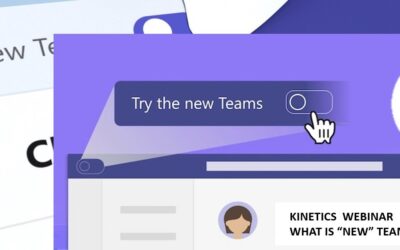
REWATCH – Webinar – Meet the Microsoft Teams 2.0
We rely on Teams for so much and now, Microsoft are releasing a major update to it. Teams has been changing in front us, and adding new features, but this new version means that change is accelerating. Why are Microsoft changing it? What is 'new' in it, and what can...
Avoiding Subscription Bombs
If 10,000 emails suddenly flooded your inbox, what would you do? Suddenly any real messages will be lost in the blitz of spam that's overloading your screen. It is hard enough to delete all those messages, let alone filter out the genuine ones from the flood. This...
Gotcha!
"GROUP-IB" are a Singapore-based cyber-security provider. They go deep into the cyber-crime sphere and it's paid off. After 30+ attacks, and over $US30M stolen, "OPERA1ER" have been caught! They describe a bad actor who, from 2019, had used the same MO over and...

Look before you click
The latest trend in phishing is pictures! It might be a thumb nail of a picture - a cute pet, interesting garden scene, or some other curiosity. It might be in the form of advertisement. Maybe it is offering a time sensitive, and urgent deal. It might even be a...

REWATCH Cyber Lessons from the field.
What can we learn from recent NZ cyber-events? What is real and what is hyperbole? Scroll down for the MFA revelation - it will surprise you!Introducing Campbell McKenzie from Incident Response, the team called in after cyber-events to help clean up and manage the...
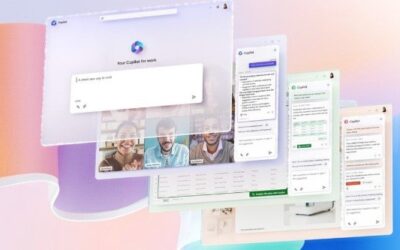
Get ready for your AI Copilot
We’re excited about Copilot. It was announced a few weeks ago, Introducing Microsoft 365 Copilot – your copilot for work - The Official Microsoft Blog and promises to help us do what Microsoft call ‘the drudgery of work on tasks that zap our time, creativity and...

Free AI images: Have you tried Microsoft Designer yet?
What is Microsoft Designer? If you have had fun with ChatGPT, (ChatGPT, write me a security policy in the theme of a country and western ballad) then you’ll love experimenting with Microsoft Designer. Like ChatGPT, designer brings AI to the desktop, in this case to...

A move to the cloud for TBB: Kinetics advances prominent law firm’s digital journey
Faced with a legacy practice management system coming towards end of support, Auckland city firm TBB tested the market and decided on partnering with Kinetics for the delivery of a replacement. Through the engagement, Kinetics has not only successfully migrated TBB to...
REWATCH Did you know that, on average, 1.2 million Microsoft accounts get compromised every month?
Did you know that, on average, 1.2 million Microsoft accounts get compromised every month? According to Microsoft, 99.9% of hacked accounts didn't use MFA, and only 11% of all accounts have MFA enabled. The average cost of a ransomware security breach is $4.62...