“A cybercriminal only has to be lucky once, while a defender has to be lucky every minute of every day.”
– Combating Ransomware – A Comprehensive Framework for Action: Key Recommendations from the Ransomware Task Force.
The message we hear from governance boards over and over is ‘can you prevent hackers from stealing our data?’ Every time there is a high-profile attack, the calls get louder. As cyber security attacks become more frequent, the awareness of this activity increases exponentially.
The simple reality is that cyber-crime is now a mega-business. The cost and effort to combat cyber security threats grow all the time, and while nothing is guaranteed, there are things we can do to reduce your risk.
It means stepping up our collective cyber security game. New tools, new processes and new staff awareness. The protections that seemed excessive a year ago now seem to be inadequate. We have to keep adding new tools and services so that you can select a level of protection that you are comfortable with, and like your insurance, you need to reassess this every year.

What do you need to think about to protect your organisation?
1. The biggest risk is people and processes.
We suggest making a representative group and mirroring the practice of a Health and Safety committee. Have a ‘Cyber Security’ committee that spends time thinking about how someone could accidentally give away confidential data – start by thinking about how your data is held, where it is held, if it is confidential, and who has access to it. Next up are simple things like credentials. For example, if a client calls up for anything, from a question to a password reset, how do you verify who they are before providing any confidential info. Inside the company and out, people are the biggest risk to cyber security, and the security of the information your company holds.
2. We all know about malware and ransomware but…
Malware and ransomware typically get in through software bugs, and the best answer to this cyber security threat is to ensure everything is patched. Do you get regular reports to show that everything is patched or do you trust that it is done? “Everything” can be quite a long list but you can divide it up by types of machines (servers, laptops etc). Patching isn’t just for Microsoft tools, but everything that you use – Adobe, Google, and so on. Digital security is crucial across your network, even on mobile devices.
3. We’re all aware of antivirus but today we need to go further.
A good level of cyber and information security requires a more intensive end-point protection and personal firewalls, even for computers that stay behind the corporate firewall. That’s because it’s surprisingly common for ‘guest’ machines to connect to networks, for example, to support visitors, and you simply don’t know what state their devices are in and what viruses they may introduce.
4. Common attack vectors include “phishing”. The best defenses are:
-
-
○ Regular phishing tests, to see how aware your colleagues are.
○ Cyber Security briefings and awareness training to help everyone stay alert and support each other, both via eLearning and in-person presentations. Kinetics provides Cyber Security training in NZ
○ URL scrubbing – testing the URLs people click on BEFORE the site opens to warn you before you inadvertently browse to potentially infected websites.
-
5. The Darkweb!
It pays to be aware that some of your data is ALREADY on the darkweb. It will mostly be credential information scavenged from historical hacks of sites like Sony, LinkedIn, Marriott, and many others. Occasionally this will surface up to you as an email that states your account name, and password for a particular site, along with a threat, for example, “We know what you have been up to, pay a ransom or we will share this publicly”. If you recognise the username and password and it’s a common one that you use, then this threat can be very compelling.
The best defense is to ensure everyone uses unique passwords for everything, and the best way to do that is with a secure password vault tool.
6. Multi-factor authentication!
MFA isn’t infallible, but in conjunction with the items above, it’s a very important layer of cyber security. We regularly see compromise attempts on Office 365 in particular, and these are being defeated by simple steps like enforcing multi-factor authentication, and where possible, limiting logins to territories that people log in from. For example, unless you have people currently in eastern Europe, then you can simply block access from IP addresses from those countries. MFA should be on EVERYTHING, not just Office 365 but also the less common sites your people access.
7. Shadow IT Detection…!?
Looking at the first item on the list, you will be amazed at some of the tools in use by your people. It is extremely common for people to set up an account on an external website, or install an extension to get a job done. They often just use their email address and make up a password. That means that if they leave your organisation, they can still log in with the email address – the webtool doesn’t know they’ve left! Even worse, you don’t know how secure the tool is, and often you don’t even know about the tool at all! Shadow IT can hugely compromise the security of the data and information your organisation holds on to.
8. Microsoft have baked some excellent protections into Microsoft 365. Are you using them?
Microsoft has for example, ‘data leak protection’ to help set up a regime where Office 365 can detect confidential data (eg credit card numbers, health records, and so on) and then permit or prevent certain actions – for example preventing emailing a spreadsheet with more than say 5 of these records on it, or at least warning you before you do. It can also warn when it detects unusual behaviour such as copying or deleting large numbers of files. The trick is that this needs to be turned on, configured, and, above all, maintained and monitored.
9. Consider vulnerability scanning on a regular basis.
Vulnerability scans are based around CVE (Common Vulnerability and Exposures) and CVSS (Common Vulnerability Scoring System) and are maintained by First.org, a global forum for response and cyber security teams. CVE’s can describe vulnerabilities in software on any connected device, from baby monitors to virtual appliances, CVE’s can be found everywhere and anywhere. A deep vulnerability scan is intensive. In addition to scanning devices, it will attempt to use common login and passwords to brute-force hack devices.
Read some of the latest news on Cyber-Security
New cool stuff in your Office 365
[header2 text="New stuff, all the time" align="left" color="#336A40" margintop=""] Microsoft are continually updating Office 365 with awesome new tools and more efficient ways of working. Keeping up with these and learning how to use them is a big challenge, which is...
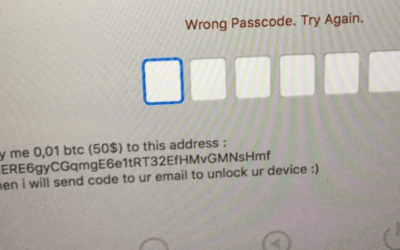
Macs are the latest victims of ransomware
According to Veeam the number of ransomware attacks has jumped 6000% since 2015-16. There is an interesting correlation between the increase in ransom attacks and the increase in value of bitcoins! Bitcoin value in NZ dollars. Source Google Finance Now we...

Seamless migration to cloud file storage
"We've been very fortunate to have them on board. Our transition went very smoothly. There was a great sense of comfort about them and they are very professional in what they do." - Jeremy Sole, CEO SharePoint migration Making the change from local file storage to...

Member training for the EMA
"For anyone thinking of using Kinetics for training : you're going to get value for money, on topic training. Definitely thumbs up." - David Foley, EMA Learning Manager Member IT training The EMA turned to Kinetics when they wanted to provide members...
No excuses for ugly PowerPoint slides
Add a design eye to give some pizzazz to your PowerPoint Not everyone has an eye for design – particularly when it comes to PowerPoint. Now you can get PowerPoint to design your slides for you. 1. Add the text and content you wish to display on your slide. The...
Sensing your office Vibe
As Kinetics had grown, our ability to understand what everyone in the team is feeling or thinking has diminished. The distance that growth brings between staff and managers creates doubts and misunderstandings that can be hard to see. More and more we have...
BEWARE THE FAKE LOGIN
Most people will be familiar with the concept of linking something to your Facebook login. Many sites offer you the opportunity to login using your Facebook account. Scammers use this concept to farm credentials for other sites. One we have started seeing more...
Microsoft 2017 Country Partner of the year!
[header2 text="THE SECRET TO OUR SUCCESS... IS OUR CLIENTS" align="left" color="#336A40" margintop=""] On top of our recent Cloud Productivity award, Microsoft have just announced Kinetics as their overall New Zealand 2017 Partner of the Year. We love doing what we...
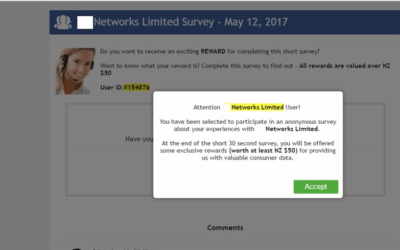
A simple but effective hack is back
[header2 text="We've seen this several times in the last few weeks" align="left" color="#336A40" margintop=""] A classic phishing technique has been updated and is reaping rewards for hackers. Delivery is by email or web popup. You are asked to take a survey (often...
Security Alert – WannaCry
There is currently a worldwide security alert associated with the latest ransomware attack - 'WannaCry'. Media coverage has been heightened as the exploit itself was originally discovered by the NSA in the US. Further newsworthiness was added when the first notified...